Six months on….a closer looks at the Birmingham England Temple project

Key points
In March, we announced that we had been selected to deliver the Birmingham England Temple project for the Church of Jesus Christ of Latter-day Saints. Fast forward six months, and works are really starting to take shape.
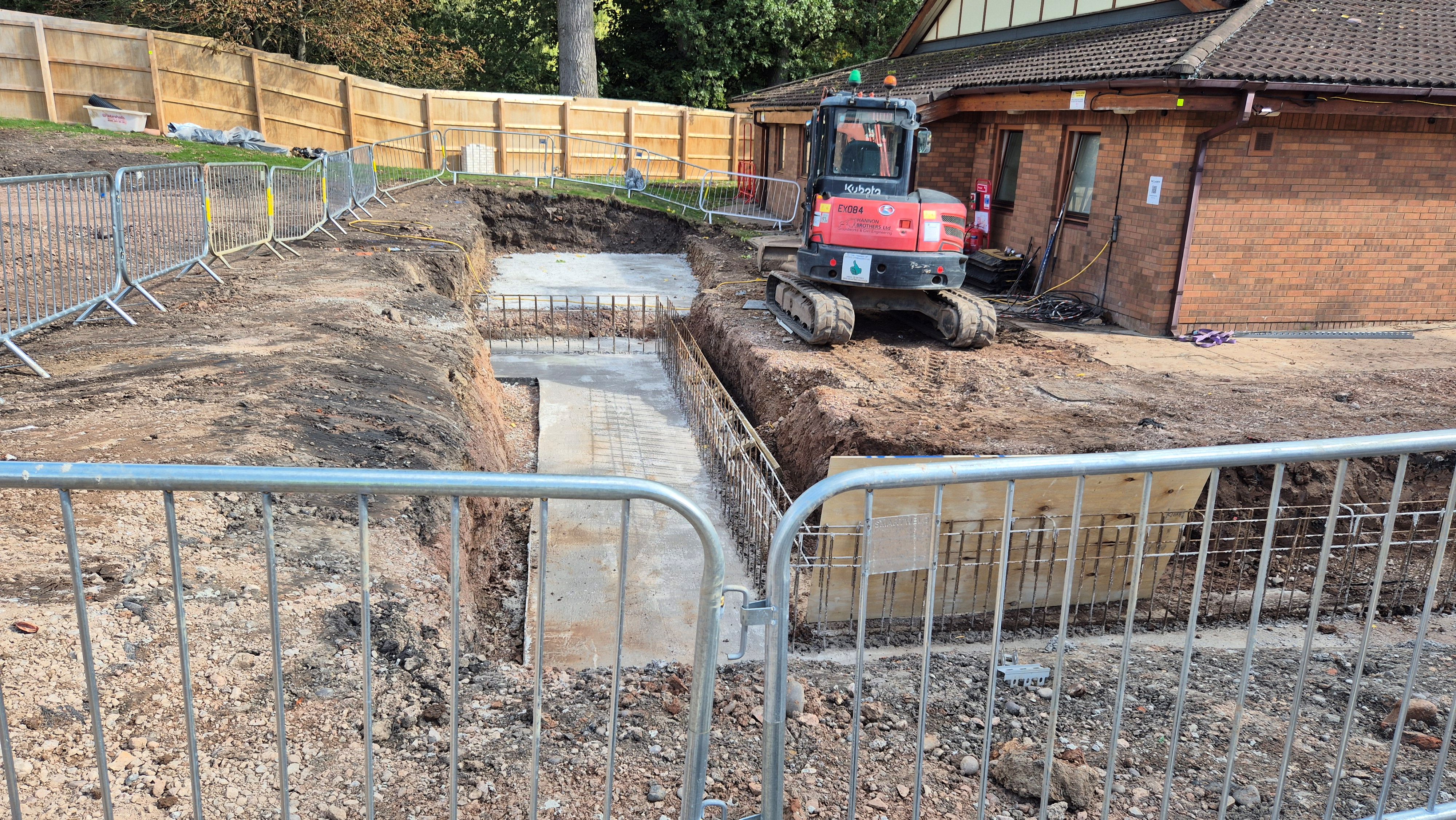
The existing missionary building has now been demolished to make way for the new temple. Over 270 drilled piles have been installed to form the foundation of the new structure. Throughout these works dust and noise levels have been carefully monitored to minimise disruption. Drainage works for the new access road and car park are underway, alongside the installation of retaining walls across the site.
In the coming weeks, ground beams and pile caps will be formed, followed by the construction of a new access road and car park, that will accommodate the new site set up. This phase involves diverting multiple services, adding another layer of complexity to a site that is situated in a predominantly residential area. Careful planning and co-ordination are essential to mitigate disruption to neighbouring properties.
The second building on the site is a two-storey ancillary building located behind the main temple. It will house the office space and living accommodation for the church. The new car park will sit to the right of this building, adjacent to the existing meeting house, which currently serves as site offices.
Both new buildings are steel frame structures. Construction of the temple frame will begin in early 2026, followed by the ancillary building. Once complete, the stone façade for the temple will begin in mid-2026 – a complex package of works being delivered by Szerelmey.
The stone and how it is procured, selected, installed and finished is very important to the Church to maintain consistency with other Temples constructed worldwide. The stone is a specific shade of limestone from a Portuguese quarry, and a process called ‘dry laying’ has begun where pieces are laid in place horizontally and approved. Each piece is then carefully numbered, packaged, and shipped to the UK. Installation will take over six months to complete.
The 38-metre-high spire installation is a particularly complex procedure, requiring a bespoke scaffold *cantilevering through the tower windows so that roof areas beneath can progress and become watertight. (*cantilevering is a structural technique that extends structures without columns or supports underneath).
The ancillary building differs significantly in construction, being predominately brick built, with a small amount of stone incorporated. The type and colour of the bricks are carefully selected and must be approved by both the Church and design team.
In addition to constructing the temple and accommodation block, we will manage the renovation of the existing meeting house and undertake extensive landscaping works, including the planting of mature trees to enhance the natural surroundings. The Birmingham England Temple is the third temple in the UK and will feature bespoke design elements, including carved stone façades, custom joinery, feature lighting, and finishes such as marble, stone, ceramic, and gold leaf.